

Article & Photos by: Chris Berens
Hunting whitetails is always a challenge — no matter the location. But hunting them on public land often adds increased obstacles that deer hunters on private land rarely need to worry about. More deer hunters, small-game and bird hunters, hikers, dog-walkers and others come and go as they please on many public properties, as is their right to. All of this human activity adds up to put a lot of pressure on deer, and can diminish the odds of successfully filling a tag. Luckily, it’s not all doom and gloom, because there is plenty of good hunting to be found on public lands. An important aspect of finding success on public lands is keeping a low profile and not drawing unwanted attention to yourself, not only from deer, but from other hunters and public-land users. Staying “out of sight, out mind” will go a long way toward finding and keeping good hunting spots to yourself. Remember, you’re not only hunting the deer, you’re also competing with everyone else for the best spots to hunt. By doing your best to stay undetected you can avoid alerting hard-hunted deer and bumping into other hunters. It should go without saying that legal, ethical hunting practices must be adhered to. Anything less is unacceptable. Here are six ways to stay under the radar when hunting on public land.
Keep a Low Profile
Deer hunters obviously need a mode of transportation to reach their hunting spots, and whether that vehicle is a pickup truck, SUV or car, it doesn’t really matter as long as it doesn’t scream to everyone that goes by, “Hey I’m hunting deer here!” Camouflage accessories or paint jobs will definitely draw attention to your vehicle, and to a lesser extent so will a bunch of hunting-related decals of gear manufacturers and big bucks. Now there is absolutely nothing wrong with showing off your passion for deer hunting in whatever way you want, but this might not always be the attention you want when parked at an out-of-the-way hunting spot that other people don’t know about. The same goes for big suspension-lifted trucks with loud exhaust and huge tires. Again, absolutely nothing wrong with modifying a truck, but remember it’ll often draw unwanted attention — notably when resonating exhaust tones wake up the neighbors at 5 a.m. opening morning.
Parking and Access First of all, try to find a spot away from marked parking areas if possible. That way it’s not as easy for other hunters using the property to recognize your vehicle. And people who don’t hunt might not automatically assume you’re there to hunt, and instead might just be out for a hike or walking the dog. If possible, arranging a drop-off and pick-up ride from a friend or family member can be an outstanding option. Before and after hunting, don’t stand around the vehicle talking, looking at maps and checking gear. Anyone who drives by will immediately recognize you as hunters, and assume that the surrounding area might have some potential for them to hunt, too. When there are houses nearby, try to park out of sight of them. You’re not doing anything illegal, but the old saying, “out of sight, out of mind” is a good thing to remember in the case of curious or spiteful neighbors. And they might hunt the area, too, so you don’t want to make it easy for them to know what you’re up to. This might not be possible, because many hunting areas have only one point of access. But do the best you can, even though it might mean walking farther from your vehicle to get where you need to go. When arriving back at your vehicle at the end of a hunt, it’s a good idea to stop while still in the woods and check the area for traffic, bicycle riders or people taking a walk down the road. Don’t forget to turn off the flashlight when it’s after dark. If you can, just wait for them to pass by before making your exit to the vehicle. If they don’t see you all geared up for hunting, they have no way to know for sure if anyone is actually hunting the area, and they won’t have the chance to stop and start asking questions to find out more.

Grab Your Gear and Go
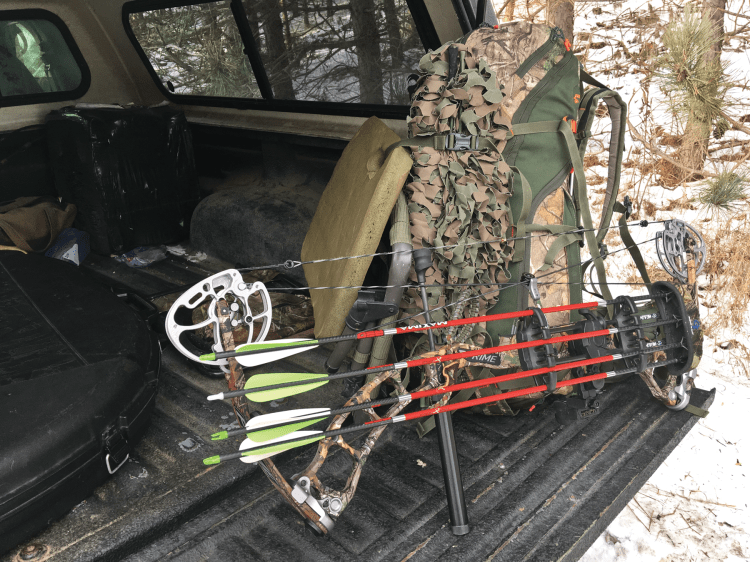
Do your best to have all of your clothes and gear ready to go when you arrive. Set it up to be as mobile and ready to grab and go as possible. Park, quickly change clothes if you need to, grab your gear, spray down with scent killer, hit the woods and get out of sight of the road and parking area. Then when you’re a bit of a distance away, stop and re-arrange the gear if need be. Or stop to check your map, compass or GPS bearings to make sure you’re on the right track. An extremely helpful item is a large, lightweight frame daypack that is capable of carrying clothing, snacks, water and gear for the hunt, and has attachments for strapping on your blind/chair or treestand and climbing sticks if necessary. It might seem like overkill to use a pack system designed more for camping or Western-style hunts, but it is well worth it for the amount of gear you can carry securely and comfortably.
Stand Solutions
Even where it’s legal, don’t leave stands out overnight. In addition to staying mobile for changing conditions, there are a few other reasons. First, to keep deer from being aware of the stands. Some hunters might say this is being too cautious, but bucks and old does know their core areas so well, especially on public land, that any little thing out of the ordinary might tip them off to your presence. Keep as many factors in your favor as you can. A public-land hunter gets so few chances at older bucks that there’s no reason to give them any help. Second, to keep other hunters from knowing where you hunt. You work hard to research and scout these public areas and you don’t want somebody else to stumble into your spot and easily spot a stand or blind and know that someone else is hunting there for a good reason. Most hunters are ethical, trustworthy folks who would keep moving to other areas of a property out of respect for a fellow hunter’s spot. But the truth is that not everybody is as respectful as we all like to think. And those types won’t hesitate to use your scouting and stand prep as their own, either killing a deer there or messing up the spot with sloppy hunting tactics. So, just like with a big buck, don’t make it easy for those types of people to take advantage of you. This goes the same for leaving out bow hanger hooks, pop-up ground blinds, making ground blinds out of sticks and branches — and most certainly a trail of ribbons or reflectors to your spots. A compass and GPS won’t leave any sign for others to follow. Finally, if a stand is not left out in the field then it can’t be stolen. Stands and blinds are not cheap, and again, not everyone is honest. Remove the temptation of walking off with your valuable deer hunting gear.
Stand Locations
When it comes to the exact spots you hunt, there are a few more ways to stay discreet. For treestand hunting, trim the absolute bare minimum number of branches to get your treestand up in the tree. Some areas may not allow any trimming, which can make choosing a tree difficult, so be sure to check local regulations before sawing off any branches.At eye level it can be surprisingly easy to spot trimmed branches on a stand tree and in shooting lanes, even when you’re not looking for them. Plus, you have to wonder how obvious it is for a mature buck to notice the sight and smell of fresh cut branches, especially when you didn’t have time to prep the tree long before the season began. Leaving accessory hooks or quick-attach treestand mounts up in a tree can make your setup time faster, but again, those leave clues to other hunters that someone else thinks this is a good spot to hunt, and they might take advantage of that. Pop-up ground blinds are awesome to hunt out of for comfort, scent control and hiding eye-catching movement, but they can be heavy and cumbersome to carry and set up for short hunts. The temptation is definitely there to set them up and leave them where legal. Again, try to resist that and use either a very light, quick-set pop-up blind, or a simple but effective camo netting blind. These are very effective for staying concealed, and are lightweight and extremely portable. By all means clear out any leaves, sticks and debris from the ground inside the blind to help stay quiet. Then before you pack up and head home, pull that same debris back over the bare ground to hide any trace that you were there. It takes only a few seconds and can make a difference. Ground blinds made of natural materials such as branches, deadfalls, logs, etc. can be highly effective for staying concealed. But it takes some time to gather the materials and build them, and also to disassemble them after the hunt. An easy alternative is to simply tuck yourself back into the edge of thick cover right where you would want to construct a blind in the first place. After becoming accustomed to using manufactured, fully enclosed blinds, many hunters would be utterly surprised at how well camouflaged and hidden you can get. Tall grass, deadfalls, cattails, boulders, upturned tree roots and thick pine trees all offer extremely excellent and comfortable cover. Take along a small folding stool or chair, tuck yourself back into and under these surroundings, and make sure you have a couple of open shooting lanes. If the wind is right and you stay quiet and still, you might be surprised at how many shot opportunities you’ll have. One of the best things about this strategy is that when you pack up and leave, no one will be the wiser that you were ever there.
Loose Lips Sink Ships
The old saying, “Loose lips sink ships” came about long ago when the world was at war and citizens did what they could to help the war effort. To some, back then and now, it might have sounded a little extreme, and in the case of deer hunting, too, but it proves a point.Public-land deer hunting requires a lot of hard work. You don’t want to give anything away in casual conversation at work or the local diner. Simply put, word travels fast when it comes to big bucks on public land. If you spill the beans and the wrong person overhears the conversation, everybody and their brother could be walking all over your best spots the next weekend. Be careful who you share good public-land hunting intel with, making sure it’s someone you trust and respect. You’ve worked too hard to let the word out. If a new hunter or relative would like some tips on good areas to check out, that’s great, go ahead and help them out and point them in the right direction. Discouraging others from hunting “your areas” is not at all what this is about. We always need to welcome new hunters into the fold and help them learn and enjoy this great pastime. But you certainly don’t need to tell them exactly where you found those buck beds, huge shed antlers and monster rubs.
Debriefing
Keeping a low profile might not be a high priority for some deer hunters, but when hunting on public land, every little thing can make a difference in the direction of success. Opportunities at nice bucks and even does sometimes happen so rarely that you can’t afford to make too many mistakes. Your cover will be blown, your hunt compromised, and those pressured deer won’t let you get away with it.
 Modern Hunter