
BY: Tom Claycomb III
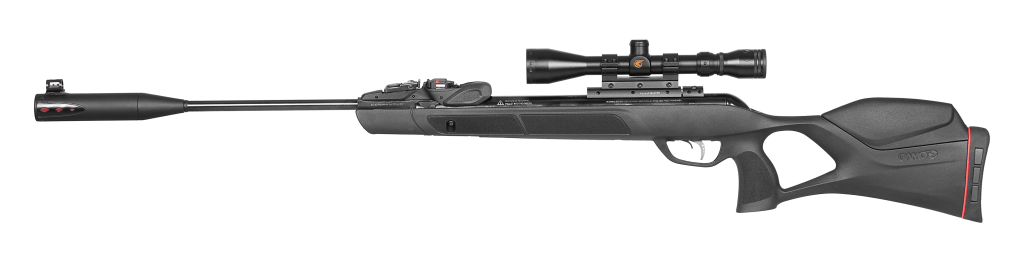
If you’re like me, a few years ago, when airguns started becoming so popular, your first thought was probably why would grown adults go overboard for pellet guns? I’ll tell you why. First off, they aren’t little Ralphie’s Red Ryder “gonna shoot your eye out toys.” Some leading airgun manufacturers, such as GAMO (www.GAMOUSA.com), boast muzzle velocities of up to 1,450 fps. Remember, your trusty old .22 rimfire spits out bullets at only 1,250 fps. If that doesn’t get your attention, then you’d probably better crawl back in the cave with Ol’ Rip Van Winkle and go back to sleep.
Here’s my history of getting back into airguns. Years ago, I met a Daisy representative at a POMA (Professional Outdoor Media Association) convention, and I shot her airgun. And soon after that I was invited to attend the 2014 Squirrel Master Classic (SMC).
The day we arrived at the SMC they handed us a Whisper Fusion and a few of us went out back of the cabins to sight them in. Fellow outdoor writer Tony Dolle looked over and said, “I feel like I’m 6 years old again and need to find an old junker car out on the farm so I can shoot out the headlights.” I think that statement sums it up. All of us started out with airguns, didn’t we?
So, to answer the question: Why would adults want to get back into airguns? The answer is quite simple — because they’re fun! You also get a lot of hunting opportunities that aren’t available with a normal firearm. Let me explain.
I used to work for a huge outfit that owned some big feedlots. As you know, pigeons love roosting in barns and silos and make a mess. They also like to land in the feed troughs and eat and mess in them, so the feedlot manager invited me down to thin them out.
A week later, my friend and outdoor writer, Ron Spomer, and I were free and loaded an armload of airguns in the truck and headed down there. We just about disrupted operations. Nearly a half-dozen of the top managers came out front while we were sighting in the air rifles and started shooting them. Before long everyone grabbed one and work was forgotten.
Thinning out those pigeons was like recess in preschool. Everyone was running around shooting and feathers were flying everywhere. They almost ran me out of pellets. They were all in, and wanted me to order them a GAMO Swarm Maxxim like the one I was shooting, which they liked because of the 10-round clip.
Airguns are great for controlling nuisance bird populations, such as pigeons, starlings, sparrows and Eurasian collared doves, and open up a lot of new hunting opportunities for you and your kids during the off-season. A lot of farmers and ranchers might not give you permission to hunt around livestock on their place if you show up with your AR, but tell them you just want to take your kid out with an airgun and it’s not very likely you’ll get turned down.
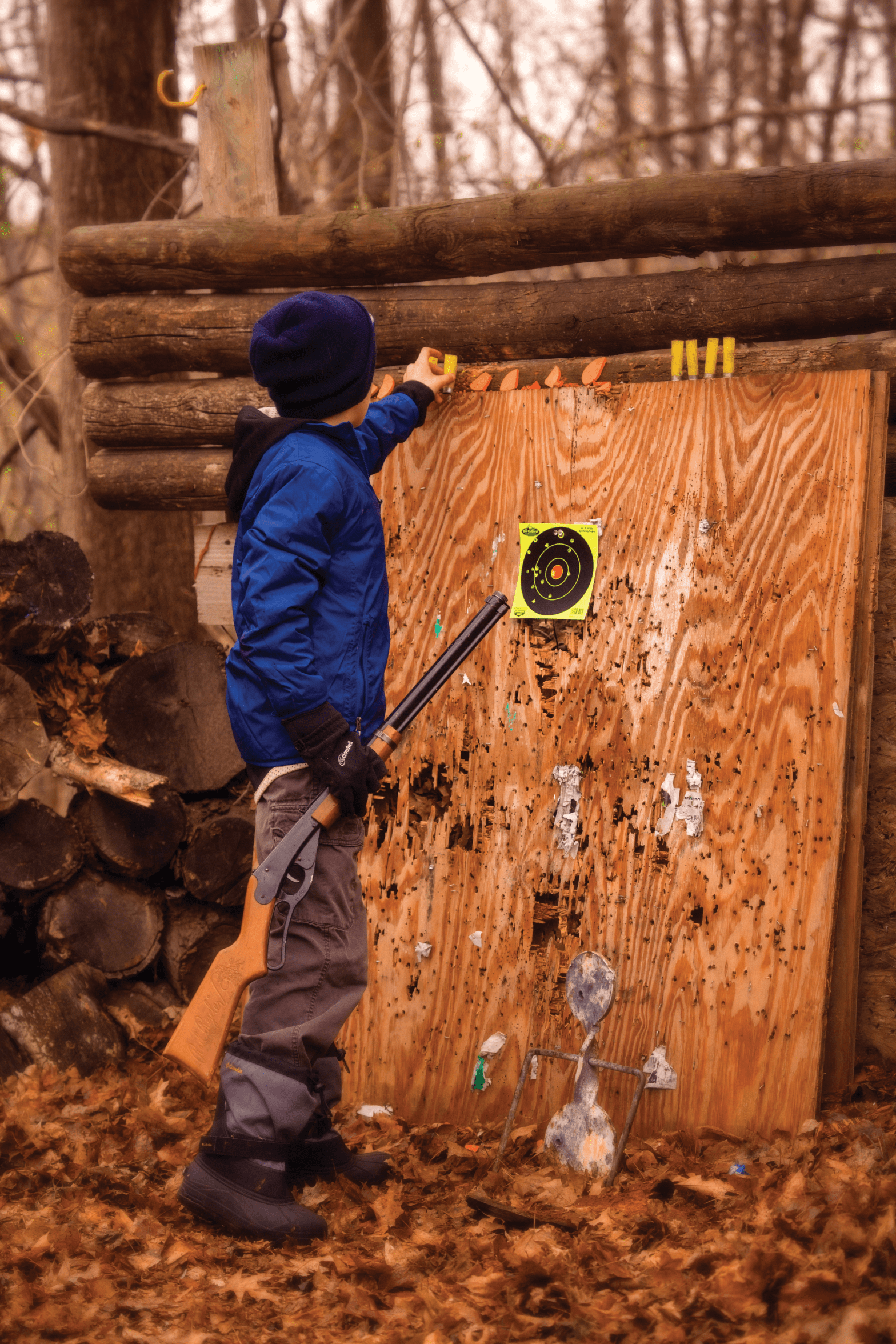
Plus, airguns are a great way to break your kid into hunting. That’s how most of us got started isn’t it? In my family, we got our first BB gun at age 6, pellet gun at 8 or 9 and a shotgun at 10. Yes, these airguns are powerful, but still, they’re safer than a .22 rimfire or shotgun. But I want to make one thing perfectly clear — they are not toys.
To elaborate on the safety aspect, I remember as a kid, one of the older boys in town was crossing a fence and shot himself with a Benjamin pump-up air rifle. The pellet penetrated his chest and bounced off his heart. So you need to be careful with them just like with any firearm. Don’t give your 6-year-old an airgun that shoots 1,450 fps, have him or her tag along with a much less potent Daisy Red Ryder (www.Daisy.com).
On the Hunt for Whistle Pigs
Another critter I love hunting with airguns is the ground squirrel. I live in Idaho, and out here we have a little squirrel everyone calls a whistle pig. Its official name is a Townsend ground squirrel, and they are a blast to hunt. Bear hunting is going on at the same time that whistle pig hunting is peaking out, and it’s a toss up as to which species I like hunting more.
I mean how can you not love hunting whistle pigs? On a good day I’ll get 400 to 500 shots. They look like a small prairie dog but are more hyper. They come out in the spring when it starts warming up, but as soon as the weather turns hot, which is about the end of May or early June, they go underground for the rest of the year. So you have only a small window of opportunity — March through May — to hunt them.
Normally, .22s and .17 HMRs are the guns of choice for these little critters, but after I got into airguns I prefer to use them. They’re cheaper to shoot, you don’t have bullets erratically skipping across the prairie, and since they don’t have as loud of a report as a .22 or .17 HMR, the whistle pigs pop back out faster when hunting with an airgun. At one mound this past year a pile of young ones were popping up in groups. I had my break-action rifle and was cocking and shooting as fast as I could for probably 15 to 18 shots. It was great. Just from past experience I know I wouldn’t have had but four or five shots during that same amount of time with a .22 rimfire.
It seems to me that when I shoot one with a pellet it knocks them flatter than when I hit them with a .22 rimfire. I assume that’s because the pellet isn’t as likely to pass all of the way through them and expends all of its energy in the animal. Of course, you can’t make as long of shots with a pellet gun, but I did make a lethal head shot at 52 yards. Longer shots take a lot of practice, and one thing I’ve learned, not all pellets are created equal.
Keep It Simple and Safe
When it comes to introducing kids to modern airguns, keep it simple and safe. Not that they’re super complicated, but running a PCP (pre-charged pneumatic) air rifle is probably out of the question for most kids, due to the complexity involved in loading air tanks, charging the rifle, etc. Next up is the break-action. A lot of them take a bit of muscle to cock. Some grown women even have trouble cocking them. I don’t know an age/strength limit to tell you, but small kids are going to have trouble cocking most of them, so you’ll need to consider this when buying them an airgun. A good option is to get them one that uses a CO2 canister.
Airguns for Small Game
The next big question if you’re considering air gunning for small game is what caliber should you choose. As a kid I didn’t notice that much of a difference between a .177 and the .22. Maybe it’s due to the increase in power nowadays, but there is a noticeable difference in the killing power of a .177 and a .22.
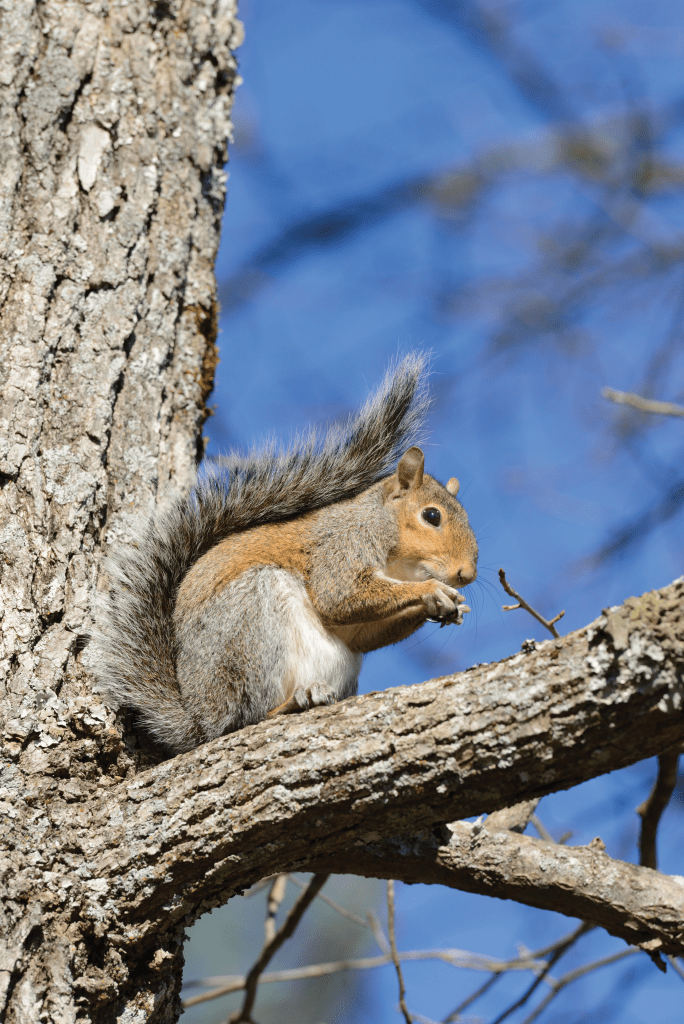
At the first SMC, GAMO supplied us with .177 models. The next year they gave us .22s. There was a noticeable difference in killing power. It took a good one-third to one-half fewer shots to put down a squirrel. So I’d strongly recommend that you buy a .22 caliber. I’ve got both and wish I had only .22s so I could stock up on just .22 pellets, instead of needing a stockpile of both.
I’m sure the .25 caliber is even better than the .22, but I don’t have one and don’t plan on getting one. Pellets are less readily available and it’d just be one more size pellet I’d need.
If you’re contemplating getting into airgunning for small game, I’d recommend starting with a break-action to keep your start-up costs low, but eventually, as you get more serious and want a greater degree of accuracy, you’ll want to progress to the PCPs. My most accurate air rifle is a Benjamin Marauder, but you’re talking $500-plus air tanks.
To save from having to run down to the local diving shop every hunt to fill up my tanks I got a compressor from Air Ventura. With it I can fill up my air tanks in a hot second.
One last word of warning: If you jump into the modern airgun world be forewarned — it is extremely addictive. I bet I own 15 to 20 airguns and plan on getting more. At this time there are no available airgun addiction clinics so you’ll be on your own finding a cure!
 Modern Hunter